You do not have to take a field sobriety test in California. The walk and turn, the one leg stand, and the eye test (horizontal gaze nystagmus) are all voluntary, and refusing them carries no automatic license penalty under California law.
That is different from the breath or blood test you may be asked to take after an arrest, which is governed by California’s implied consent law. Vehicle Code 23612 covers chemical tests only. It does not cover roadside coordination exercises.
Most drivers do not know this. The officer asks politely, the request sounds routine, and people comply. This blog explains what you are actually being asked to do, why these tests are far less reliable than they look, and how to handle a DUI stop along Pacific Coast Highway, in Belmont Shore, or anywhere else in Southern California.
The three standardized field sobriety tests in California
Only three field sobriety tests have been standardized by the National Highway Traffic Safety Administration. If an officer asks you to perform anything else, like reciting the alphabet, touching your finger to your nose, or counting backwards, those are not standardized and have even less scientific support behind them.
1. Horizontal Gaze Nystagmus (HGN)
The officer holds a pen or finger about 12 to 15 inches from your face and asks you to follow it with your eyes only, not your head. They are looking for involuntary jerking of the eye, called nystagmus, which can be more pronounced when alcohol is in the system. Nystagmus also occurs naturally with fatigue, certain prescription medications, diabetes, head injuries, and many neurological conditions.
2. Walk and Turn (WAT)
You are told to take nine heel to toe steps along a real or imaginary line, turn in a specific way, and take nine steps back. The officer is watching for eight separate clues, including starting too soon, losing balance, missing heel to toe contact, stepping off the line, raising your arms for balance, taking the wrong number of steps, and turning incorrectly.
3. One Leg Stand (OLS)
You raise one foot about six inches off the ground, point your toe forward, and count out loud until told to stop. The officer is looking for swaying, hopping, using arms for balance, or putting your foot down.
Even sober, healthy people fail these tests on uneven pavement, in heels or work boots, in low light, when nervous, or after a long day. Read more about how field sobriety tests are administered and challenged here.
Are field sobriety tests required in California?
No. Field sobriety tests are not required for drivers 21 and older in California. There is no statute that compels you to perform them, and there is no automatic license suspension for refusing.
This is the critical distinction most drivers miss. California’s implied consent law, found in Vehicle Code 23612, requires chemical testing of breath or blood after a lawful DUI arrest. It says nothing about walking heel to toe on the shoulder of PCH at midnight or balancing on one foot in a Belmont Shore parking lot.
You can politely decline. Something like “I would prefer not to perform any voluntary tests” is enough. You do not have to argue, explain, or justify your decision.
There is one exception worth knowing about. Drivers under 21 and drivers currently on DUI probation are required to submit to the PAS (Preliminary Alcohol Screening) device, which is technically classified as a field sobriety test. For everyone else, the PAS is also voluntary.
What happens if you refuse a field sobriety test?
Refusing a field sobriety test in California does not trigger any automatic license suspension or DMV penalty. It cannot be used to add charges. Your license is not at risk for declining a voluntary test.
What can happen is that the officer may still arrest you for suspected DUI based on other factors, such as the smell of alcohol, slurred speech, watery eyes, the way you were driving, or admissions you made during the stop. An experienced officer often decides to arrest before the field sobriety tests even begin. The tests just provide additional evidence to support a case they have already decided to make.
If you are arrested, the post arrest chemical test (breath or blood) becomes mandatory under implied consent. That is a completely different rule with completely different consequences. We cover that distinction in detail in the next section.
Why field sobriety tests are unreliable
The original NHTSA studies that validated field sobriety tests were conducted under controlled conditions, on flat surfaces, in proper lighting, with trained officers following precise instructions. Real DUI stops do not look like that.
| Test | NHTSA Reliability (Original Study) | Real World Factors That Affect Results |
|---|---|---|
| Horizontal Gaze Nystagmus | Around 77 percent | Fatigue, medication, diabetes, head injury, neurological conditions, flashing patrol lights in your peripheral vision |
| Walk and Turn | Around 68 percent | Uneven pavement, footwear, weight, age over 65, back or knee issues, low light, traffic noise |
| One Leg Stand | Around 65 percent | Inner ear conditions, age, weight over a certain threshold, balance disorders, cold weather, recent injuries |
These percentages also assume the officer administered the test exactly as prescribed by NHTSA. Defense attorneys routinely uncover deviations from protocol on body camera footage and in police reports.
The critical exception: chemical tests are not the same as field sobriety tests
This is where people get hurt. After a lawful DUI arrest in California, you are required to submit to a chemical test of your breath or blood. That is the implied consent law. Refusing the post arrest chemical test triggers an automatic one year license suspension on a first offense, even if you are never convicted of DUI.
The pre arrest roadside PAS device and the post arrest evidentiary breath or blood test look similar but operate under completely different rules. One is voluntary. The other is not.
If you have already been through this and refused the chemical test, you have 10 days from the date of arrest to request a DMV hearing to challenge the suspension. After that window closes, the suspension takes effect automatically. Read our full breakdown of the breathalyzer refusal post for the rules on chemical testing and what happens at the APS hearing.
What to do during a DUI stop in Huntington Beach or Long Beach
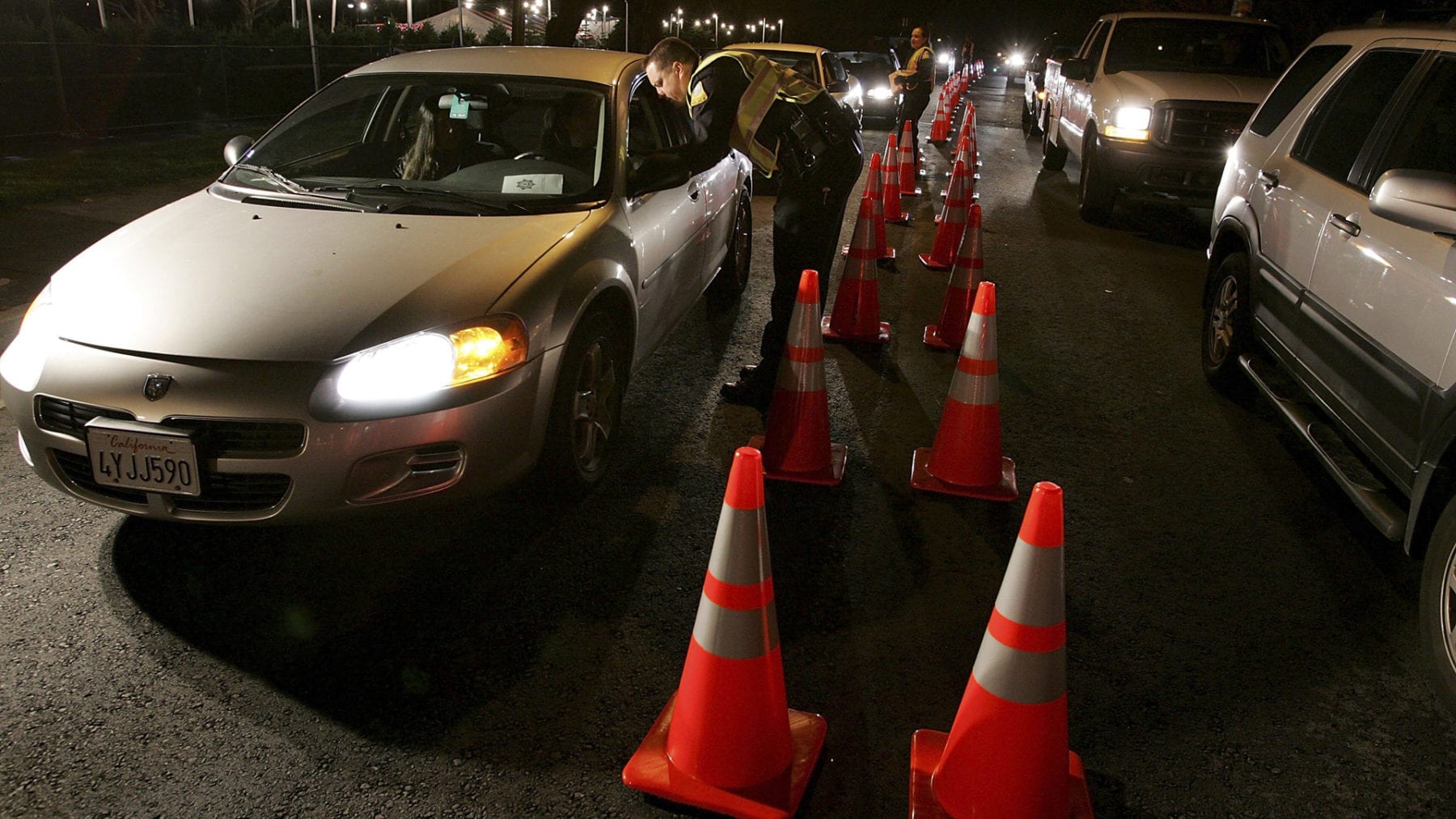
DUI saturation patrols and checkpoints run heavily across Orange County and the South Bay, especially along Pacific Coast Highway, near the Huntington Beach pier, around Belmont Shore on weekend nights, and on the major routes out of downtown Long Beach. Knowing your rights before you encounter one of these stops is the difference between protecting your case and helping the officer build it.
Be polite. Provide your license, registration, and proof of insurance. You are not required to answer questions about where you were, what you had to drink, or where you are going.
You can also politely decline the field sobriety tests and the PAS roadside breath device if you are 21 or older and not on DUI probation. If you are arrested, ask for an attorney and submit to the chemical test that follows. More on what happens after a DUI arrest in California here.
Frequently Asked Questions
What are the 3 field sobriety tests?
The three standardized field sobriety tests in California are the Horizontal Gaze Nystagmus (the eye test), the Walk and Turn, and the One Leg Stand. These are the only field sobriety tests that have been validated by the National Highway Traffic Safety Administration. Any other test an officer asks you to perform, such as reciting the alphabet, counting backwards, or finger to nose, is non standardized and carries even less scientific weight.
Can I refuse a field sobriety test in California without getting arrested?
You can refuse a field sobriety test in California, but refusal does not prevent the officer from arresting you if they already have probable cause based on other observations, such as driving pattern, the smell of alcohol, or your behavior during the stop. What refusal does protect you from is providing additional evidence the prosecution can use against you. Refusing the tests does not carry any automatic license penalty.
Are field sobriety tests admissible in court?
Yes. If you perform the field sobriety tests, the officer’s observations and your performance can be entered as evidence in your DUI trial and at your DMV hearing. However, the results can be challenged on a wide range of grounds, including improper instructions, poor lighting, uneven surface, footwear, medical conditions, and failure to follow NHTSA protocol. This is one of the strongest areas of attack for an experienced DUI defense attorney.
Is the breathalyzer the same as a field sobriety test?
The roadside handheld breathalyzer, called the PAS device, is technically classified as a field sobriety test in California and is voluntary for drivers over 21 who are not on DUI probation. The post arrest evidentiary breath or blood test at the station is a chemical test under California’s implied consent law and is mandatory. Refusing the post arrest chemical test carries an automatic one year license suspension on a first offense.
What happens if I fail a field sobriety test?
If the officer determines you failed one or more field sobriety tests, they will most likely arrest you for DUI. The test results then become part of the evidence used against you both in criminal court and at the DMV administrative hearing. A skilled DUI attorney can challenge the validity of those results during pre trial motions and at the hearing.
Should I take the field sobriety test if I have only had one drink?
Most experienced DUI defense attorneys advise against performing field sobriety tests in any scenario, even if you believe you are completely sober. The tests are designed to find clues of impairment, and conditions like fatigue, nervousness, poor lighting, uneven pavement, footwear, and even officer error can produce clues that look like impairment but are not. There is rarely an upside to performing the tests.
Know your rights. Protect your case.
If you were arrested for DUI after a stop in Huntington Beach, Long Beach, or anywhere across Southern California, the decisions you made at the side of the road matter, and so do the decisions you make in the next 10 days. Attorney Kellee Parker Harris personally handles every case at Parker Law Center, from the first phone call through the DMV hearing and into court.
Call (800) 805-8804 for a free, no pressure consultation, or reach out online here. We will walk you through where things stand and what your options actually are.